Is my practice even working?

by Ari • 18 Aug 2025 — 3 minute read

There’s a question I hear all the time:

“How do I know if what I’m practicing is actually making me better?”

The question usually appears when progress feels slow or a new concept isn’t landing right away. Or when working on a challenging piece or concept for a while, and it feels like treading water.

It’s a fair question – and one I’ve asked myself: is this even working?

Here’s what I’ve learned – both from my own practice and watching hundreds of students grow:

If your practice is built on intention, repetition, and awareness, it’s working.
Even when it doesn’t feel like it.

If you’re staying present – tracking what you’re working on, listening closely, slowing it down, noticing the little details – you’re laying bricks.

And those bricks build a foundation. Even when it feels messy.

​

What doesn’t usually work?​
👎 Mindless noodling
👎 Practicing things you already do well
👎 Playing the same thing over and over while tuning out

Those moments have their place too – they are fun! But they don’t build anything new.


So how do you know it’s working?

You notice small shifts:

👍 You feel the subdivision clearly, it is grooving and you know it
👍 A fingering that was awkward feels easier
👍 You start to hear things you used to guess at
👍 You’re not lost in the form – you’re riding it

Progress doesn’t always show up as a big moment. Sometimes it’s just that quiet “huh” after a phrase lands better than yesterday.

That counts.

So if you’re asking yourself, “Is this doing anything?”​
Try this instead:

Am I playing with attention?​
​Am I stretching just a little past what’s easy?​
​Am I showing up again tomorrow?

If the answer’s yes – even to one of those – then yes, it’s working!

Want help sticking to that kind of practice?

Then check out our Cohorts!

A cohort means you go through one of our courses (in this case the Rhythm Matrix Course) with:
✅ Peer support
✅ A dedicated accountability coach
✅ Weekly video assignments
✅ Live feedback sessions with me

Here are two of the many tools we use in our cohorts to make sure your practice is actually making you better:

🎥 Tool one:​
You’ll record your practice at regular intervals and post it.
The act of recording helps you stay present, listen closely, and reflect.
Combine that with the feedback you’ll receive, and your progress becomes real – and visible.

🧑‍💻 Tool two:
Each time you submit a video, we ask you to state your intention.
This simple act sharpens your focus, strengthens your mindset, and helps flush out unproductive self-talk.
It turns practice into something more effective – and more personal.

Check out what Cohorts we have scheduled. They only run at certain times during the year. 

👉 Learn more here

More Posts of Interest:

Subscribe to Newsletter

Related Posts

1235 bass line

Master the 1235 Bass Line

Ariane Cap- more direction post

“I Never Practiced. I Just Played.”
(Why That’s Not the Whole Story)

Bass Technique Practice - Sandu

Practicing Technique Is Always on the Menu…
Let’s Make It Fun and Musical

syncing bass with kick drum

Do you always have to copy the kick drum as a bassist?

Shop on Amazon

More articles you might like:

Bassist, author, educator.

Groove enthusiast and learning nerd.

Joined by 15,000+ Bassists

Your Instructor

Hi. I'm Ari.

As a bassist, I have toured/played/recorded with a variety of rock, Jazz, and funk bands, I have worked with some incredible producers (Keith Olsen) and musicians (Paul Hanson, Muriel Anderson) and I toured Brazil with Stu Hamm as a duo.


As a bass teacher, I have taught at London Bass Day, Gerald Veasley’s Bass Boot Camp, SBL, Truefire, notreble… I even ran my own music school for a few years before gigs took me back on the road.


One thing to know about me is that I teach because I am absolutely fascinated with the learning process. And I am obsessed with helping others realize their musical potential.


When I started playing bass, I excelled very quickly because I had an amazing teacher who taught me using a powerful method. This method transformed my playing so quickly that I passed a bunch of high-level university auditions and even tested out of entire classes at university even though I had been playing for only a very short time.


That’s what, many years later turned into one of my books, co-written with Wolf Wein, called “The Pattern System for the Bass Player”. I created entire systems of learning based on some of these ideas and wrote books and created courses together with Wolf. Our bass books have sold over 30,000 copies and garnered rave reviews.


I started teaching online in 2009 and have embraced technology as a powerful learning tool since then, never losing sight of the importance of providing feedback and personalized guidance to learners.


Read more…

How do I know what I need?

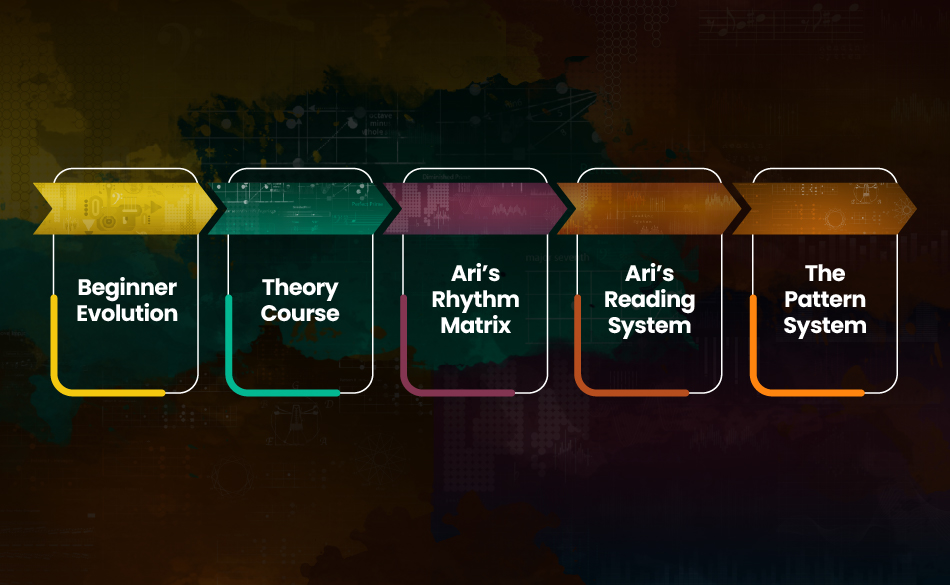
Course Progression Aris Bass Blog

SELF STUDY Course

Like self study?
Get the course, finish it on your own, in your own time.

Lifetime access if you bought the course outright.

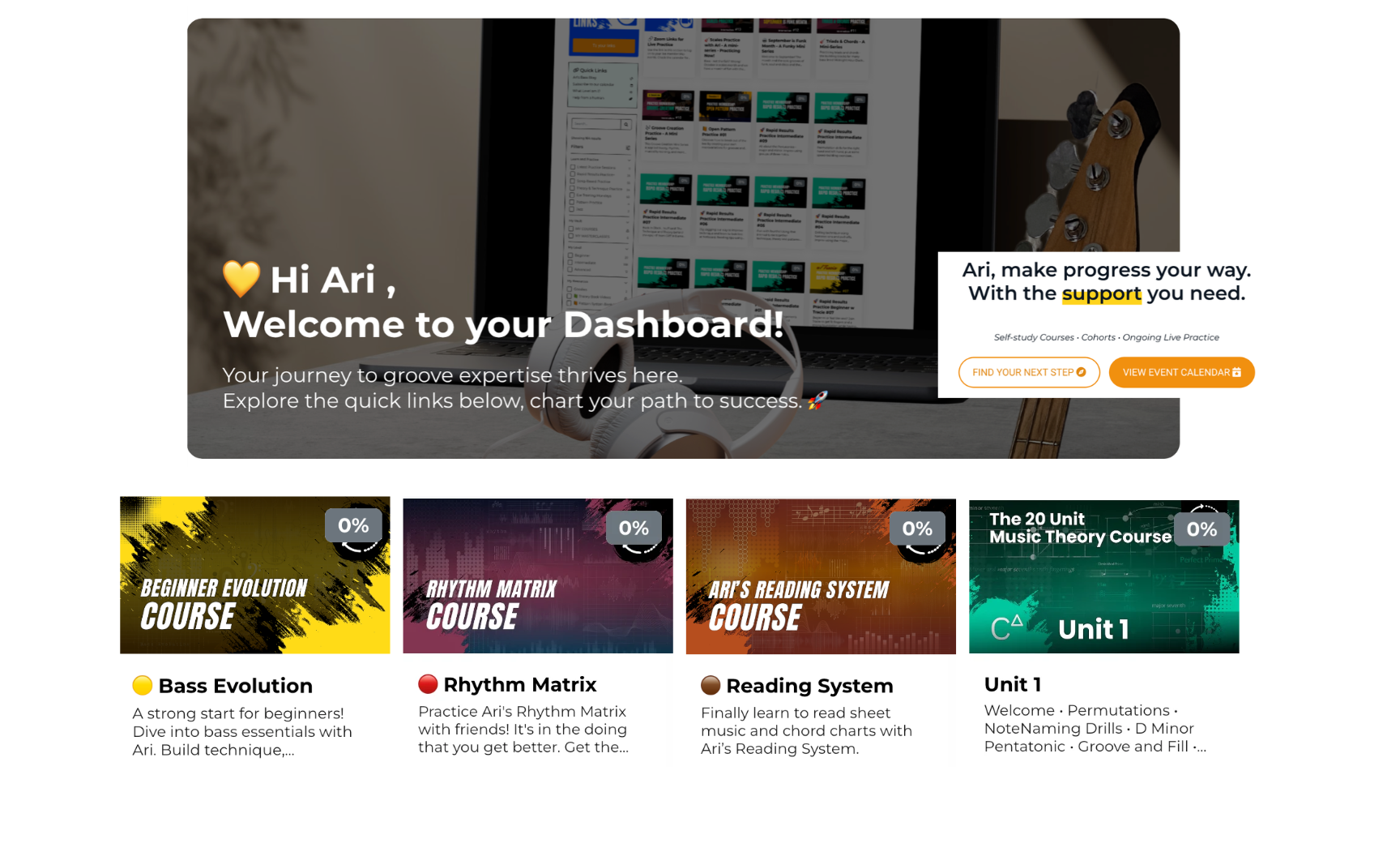
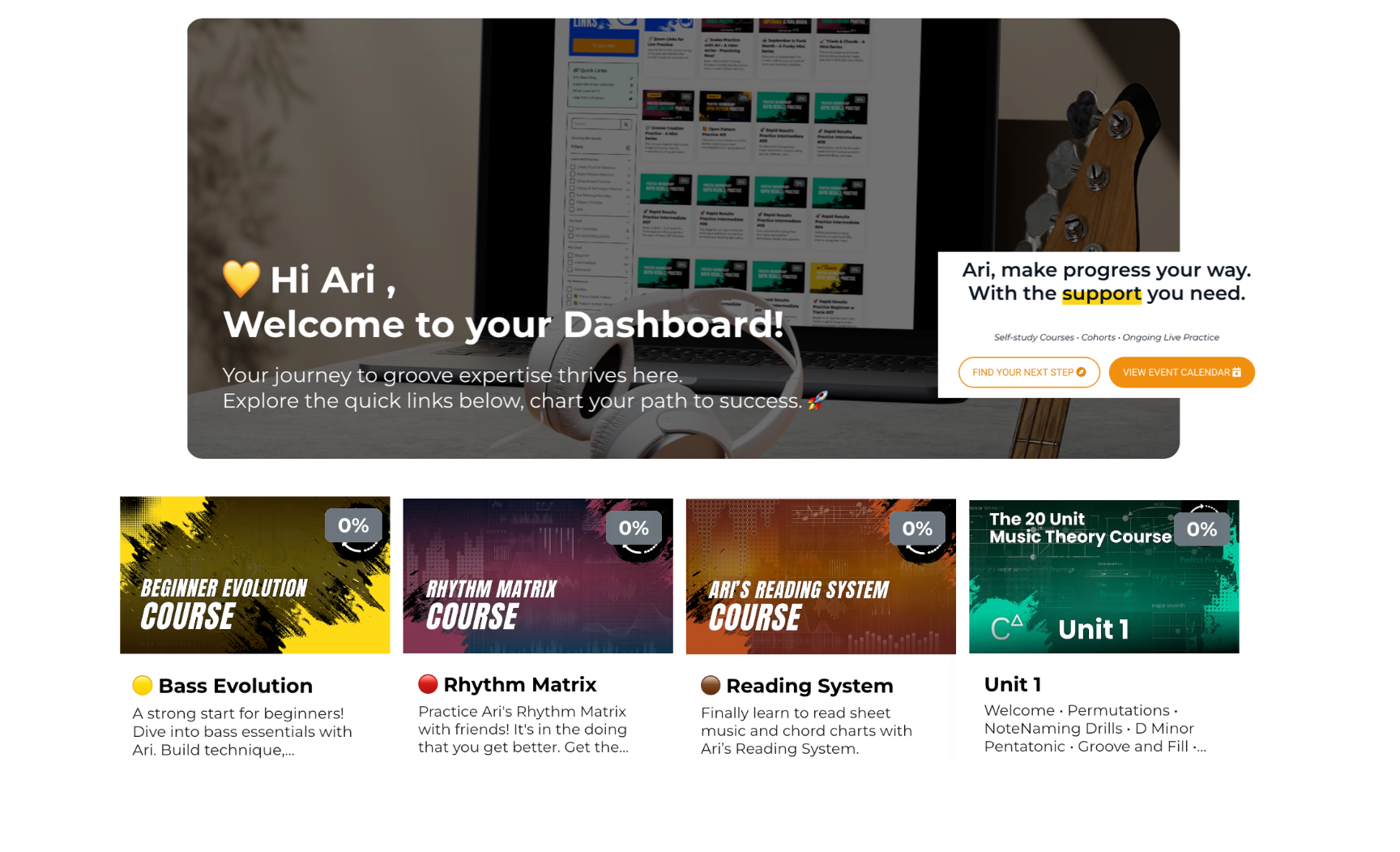
Arisbassblog Dashboard

COURSE-COHORT Bundle

Get the bundle if you don’t have the course yet and want to participate in a cohort. 

You see on your dashboard if you have the course.
The bundle usually gets you the course at a discount.

Get the Bundle

Add-on

If you already have the course – no need to buy it again! If you bought the course outright once, you have lifetime access, no matter when you bought it 

Get the add-on!

Get Ari's
Notes to Self (and Bassists)
into your inbox once a week

Videos • Tips • Practice Hacks • Transcriptions