Question from a Rhythm Matrix attendee about the first “Precision Drill” in the course where the goal is to be so in sync with the kick drum pattern that it sounds like a single sound, not two attacks.
Question: When we are trying to be at one with (or "kill") the kick drum with our bass, do we need to play exactly what the drummer is playing? Or do we get the feel of it and create our own groove? I have been analyzing the kick drum on Up on Cripple Creek by The Band and I can hear the patterns, but I don’t know if my bass line should exactly replicate it.
Rhythm Matrix Cohort Attendee
My Answer:
Look at it this way:
there is a craft/skill side of music-making, and there is a creative/artistic side.
The artistic question is: What should the bass line do in relation to the kick drum?
- Sometimes you duplicate the kick pattern exactly.
- Sometimes you hit only the important kick notes.
- Sometimes you play around it, answer it, or deliberately create contrast.
That depends on the song, the style, the arrangement, and the feel you want.
But regardless of what you choose, you always need to know what the kick drum is doing. The kick and bass make up a huge part of the groove and the low-end foundation.
You do not always have to copy the kick, but you do need to relate to it intentionally.
The craft question is different:
- Can you place your note exactly where you mean to place it?
- Can you land precisely with the kick when you choose to?
That is what the “kill the kick” drill is training.
So, no: the goal is not that you must always and forever play exactly what the kick drum plays.
Up on Cripple Creek
On “Up on Cripple Creek,” analyze what the bass does against the kick.
Notice where they line up, where they do not, and what that creates.
That is the musical study.
But yes: you need the ability to lock in with the subdivision with absolute precision, whether you are playing the same rhythm as the kick or creating your own line around it.
If you cannot control your placement, then none of the artistic choices really come across clearly.
You can think of it as “kill the kick,” but you can also practice “killing the click”—including putting the click on unusual subdivisions or beats.
The point of the Unit 1 drill is to develop reliable time and intentional note placement and practicing that with a kick drum sound is both practical and applicable.
Try for yourself: Practice Spark
⚡️ Practice Spark:
Listen closely. This may look easier than it actually is:
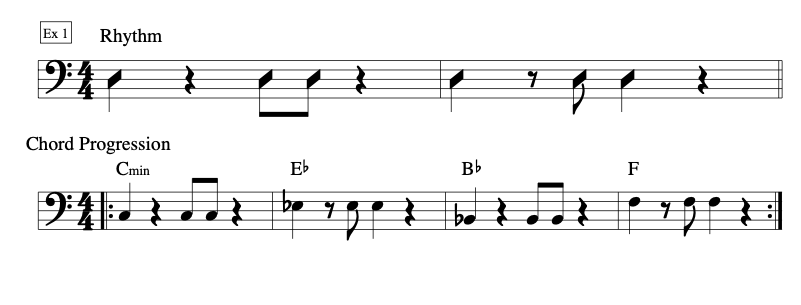
And here is the track:
And if you dare, try this tempo (this is much harder!!)
Get the Rhythm Matrix for the full course