Tapping into Tapping (TT 13)

Ari TT Tapping

Tapping into Tapping (TT 13)

Talking Technique Episode 13 is up on No Treble.


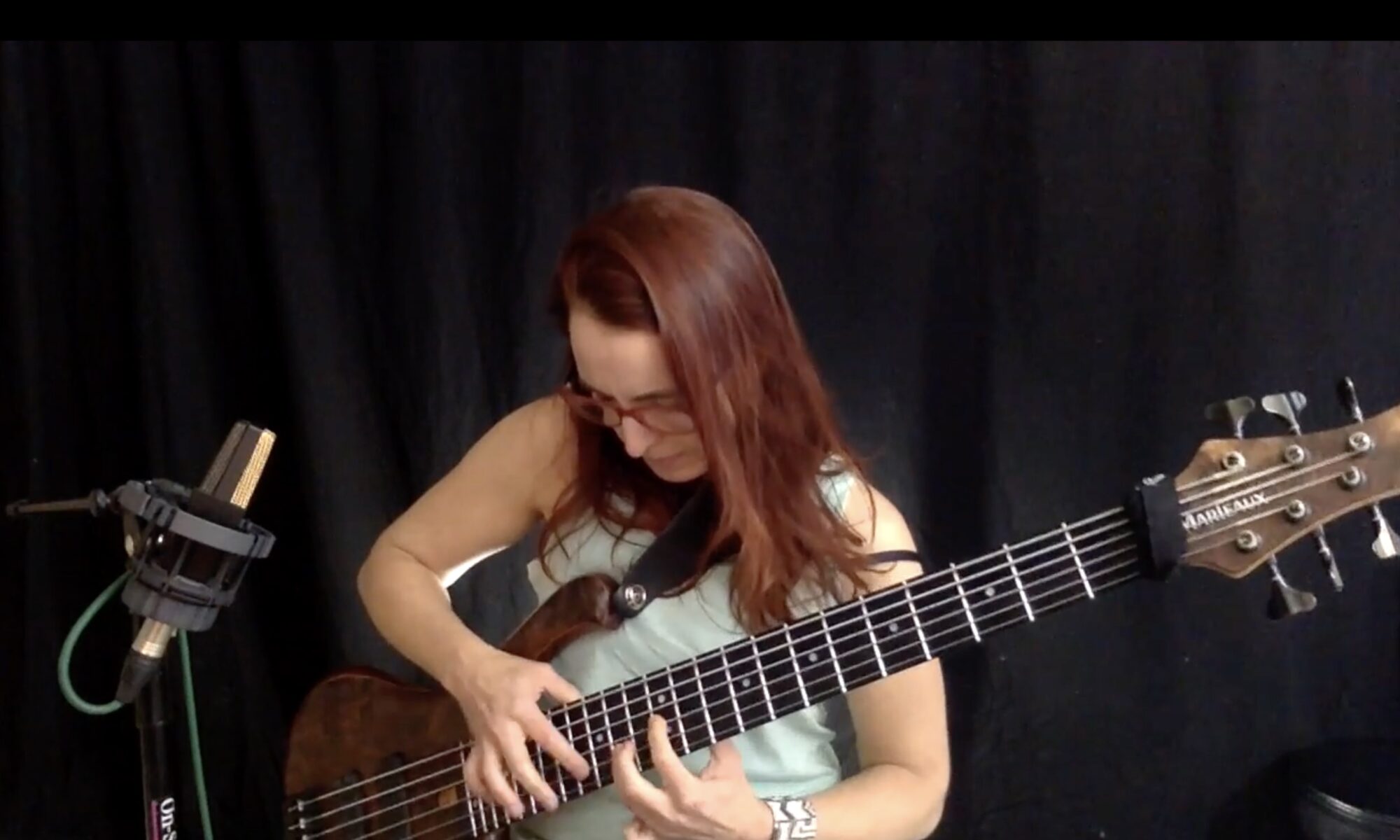
I have gotten quite a few inquiries about tapping, so here is a little introduction to this technique, paired with a few playing samples. Tapping is a really cool technique but it has to be used with taste. I play in a duo with an amazing bassoon player (OoN – The bass-bassoon duo of Ariane Cap and Paul Hanson).

I really get to stretch out in that band context – playing grooves, melodies (sometimes at the same time), chords of course… I use the six string bass for this scenario. It has only five more notes than the five-string or ten more notes than the four-string bass, but the layout of the sixth string on top enables me to reach a lot more notes at the same time.

Tapping is a good way to do that. later on in the video I show you a few exercises on my four string, because there is plenty of cool tapping to be had on that, too.

If this technique is new to you, give it a shot. It is really fun and opens up a lot of creative possibilities. Just keep in mind to always serve the song, no matter what technique you use. Enjoy!

My Gear:

Many thanks to wolftrackaudio.com for sound!

Check out: Tapping into Tapping

Q&A: Question about Intervals in Chords

Check out Mervyn’s great question about intervals in chords and my response.

Mervyn asked:

I recently discovered your website and YouTube channel and I’m enjoying the content. I have a question about intervals. It appears when musicians talk about them they are referring to the root note of a chord as the starting point to determine the intervals of the notes that follow. For example C E G B C (Major 7th Chord) makes C the root note, E the 3rd, G the 5th, B the 7th, and C the octave. I recently discovered a chord or bass line has intervals that occur as we move from one note to the next which are different from what is heard when the starting point is a root note. By analyzing the Major 7th Chord again and this time doing it note by note to determine the intervals,  C to E is a 3rd, E to G is a minor 3rd, and G to B is a 3rd, and B to C is a minor second. Is it incorrect to think of intervals from this perspective? Do we always have to analyze or label them as they occur from a root note or can we view the intervals as they occur from one note to the next?
You have permission to use my first name if you decide to answer my question in a blog post. Thanks a lot for your time. I appreciate your help.

I answer his question in two ways; keywords: musical understanding of a chord, and fingering.
https://youtu.be/gfN0HnQFRxI
intervals
I play my Votan XS Marleaux in this video.
Fretwrap by Gruvgear.
I use TC Amplification.
Dean Markley SR 2000 Strings.
WolftrackAudio provided Sound. Many thanks!

Second Inversion Hit: Van Halen to Branford Marsalis!

Pedal to the Metal (TT12)

Ari TT Pedal to the Medal

Put the Pedal to the Metal

Looking for some ideas to shed technique metal-style?
In this Talking Technique episode on notreble.com  I explore playing a minor pentatonic scale with the roots in between. That can start sounding pretty heavy! Let’s explore some variations and look at the technical challenges and how to address them. I also take another look at why I think playing the roots in between is a good technical – as well as theory exercise.
Today’s tip has to do with relaxing your face – and why that is important.

Check out my Intro to Hammer-ons and Pull-offs

My Gear:

Many thanks to WolfTrackAudio for sound engineering!