Pitch versus Note – Time to Note the Pitch!

by Ari • 26 Feb 2017 — 3 minute read

Nomenclature: The Difference between Note and Pitch

Important to be clear on important basics.

What is a Note?

The term note refers to a name of a note. As in, the note A. That could be any A… high, low, in the middle… An A is an A. If the chord chart says A, and you hit an A somewhere, you are good.

Also see: What is a Note Name?

What is Pitch?

Pitch, on the other hand, is a very specific note (played in a certain octave). This is sometimes specified with numbers: C4 is the famous middle C of the piano for example. If you are reading sheet music and the E in the sheet music is E1 (for us bassists written on a ledger line below the staff), then that specific E is asked for: Hit the open E on your four string!

This is one reason string instruments can be confusing…

An instrument such as the piano contains each pitch only once.

The bass? It depends. Take the low E for example. If you have a four string you have it only once. If you have a five string you could also play that low E on the fifth fret of the B string. It sounds exactly the same (same octave!) but it is played in a different location. The difference is slight. Only string instruments have that “feature” of having the same pitches occur in various locations.

There are also a few wind instruments that allow you to play the same pitch using different fingerings. So we are not alone with this feature. (It actually really comes in handy when you play chords or do some tapping. Very cool for figuring out great fingerings for grooves, fills, solos, too. Hey, we got options!

Now I said the open E and the fifth-fret low B sound exactly the same. That statement does not take into account “timbre”.

Timbre?

The timbre of an open E versus the timbre of an E played on the fifth fret of the B string actually is slightly different, because the B string is a bit thicker and the location on the neck of the bass has an effect of the sound. This difference – same note, same pitch, even, but a different sound quality. Timbre is the sound quality of a pitch. The timbre of the bass is different than that of the piano or the guitar. If the pitch and intensity of two sounds are the same and you hear a difference, then that is timbre you are identifying.

Music Theory for the Bass Player has lots more on the above, including fun quizzes to check if it all clicked for you. And, we are test driving it on the bass fretboard!

Happy Practicing!

 

Subscribe to Newsletter

Related Posts

Ariane Cap- more direction post

“I Never Practiced. I Just Played.”
(Why That’s Not the Whole Story)

Bass Technique Practice - Sandu

Practicing Technique Is Always on the Menu…
Let’s Make It Fun and Musical

syncing bass with kick drum

Do you always have to copy the kick drum as a bassist?

bossa vs swing

MultiBass Collaboration in our Live Practice to make you Smile

Shop on Amazon

More articles you might like:

Bassist, author, educator.

Groove enthusiast and learning nerd.

Joined by 15,000+ Bassists

Your Instructor

Hi. I'm Ari.

As a bassist, I have toured/played/recorded with a variety of rock, Jazz, and funk bands, I have worked with some incredible producers (Keith Olsen) and musicians (Paul Hanson, Muriel Anderson) and I toured Brazil with Stu Hamm as a duo.


As a bass teacher, I have taught at London Bass Day, Gerald Veasley’s Bass Boot Camp, SBL, Truefire, notreble… I even ran my own music school for a few years before gigs took me back on the road.


One thing to know about me is that I teach because I am absolutely fascinated with the learning process. And I am obsessed with helping others realize their musical potential.


When I started playing bass, I excelled very quickly because I had an amazing teacher who taught me using a powerful method. This method transformed my playing so quickly that I passed a bunch of high-level university auditions and even tested out of entire classes at university even though I had been playing for only a very short time.


That’s what, many years later turned into one of my books, co-written with Wolf Wein, called “The Pattern System for the Bass Player”. I created entire systems of learning based on some of these ideas and wrote books and created courses together with Wolf. Our bass books have sold over 30,000 copies and garnered rave reviews.


I started teaching online in 2009 and have embraced technology as a powerful learning tool since then, never losing sight of the importance of providing feedback and personalized guidance to learners.


Read more…

How do I know what I need?

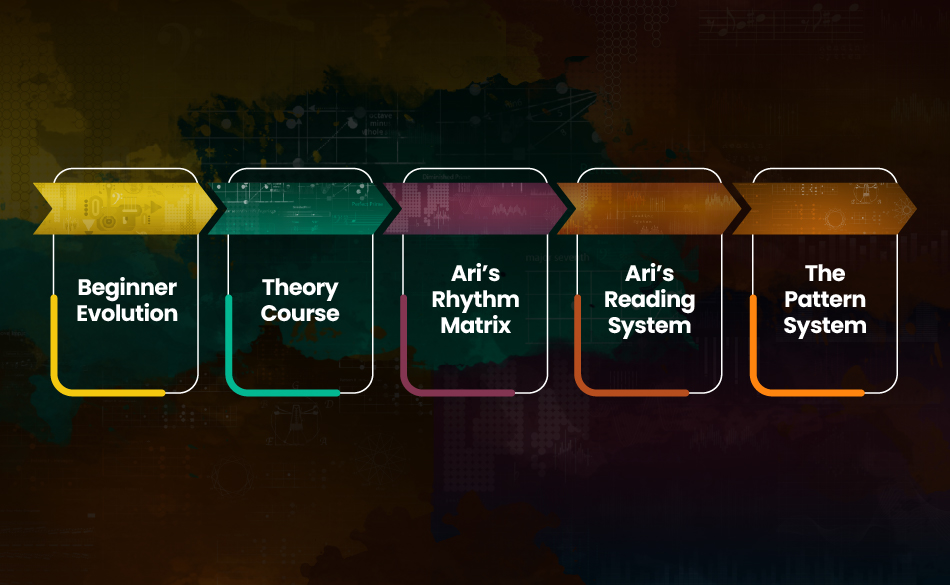
Course Progression Aris Bass Blog

SELF STUDY Course

Like self study?
Get the course, finish it on your own, in your own time.

Lifetime access if you bought the course outright.

Arisbassblog Dashboard

COURSE-COHORT Bundle

Get the bundle if you don’t have the course yet and want to participate in a cohort. 

You see on your dashboard if you have the course.
The bundle usually gets you the course at a discount.

Get the Bundle

Add-on

If you already have the course – no need to buy it again! If you bought the course outright once, you have lifetime access, no matter when you bought it 

Get the add-on!

Get Ari's
Notes to Self (and Bassists)
into your inbox once a week

Videos • Tips • Practice Hacks • Transcriptions